
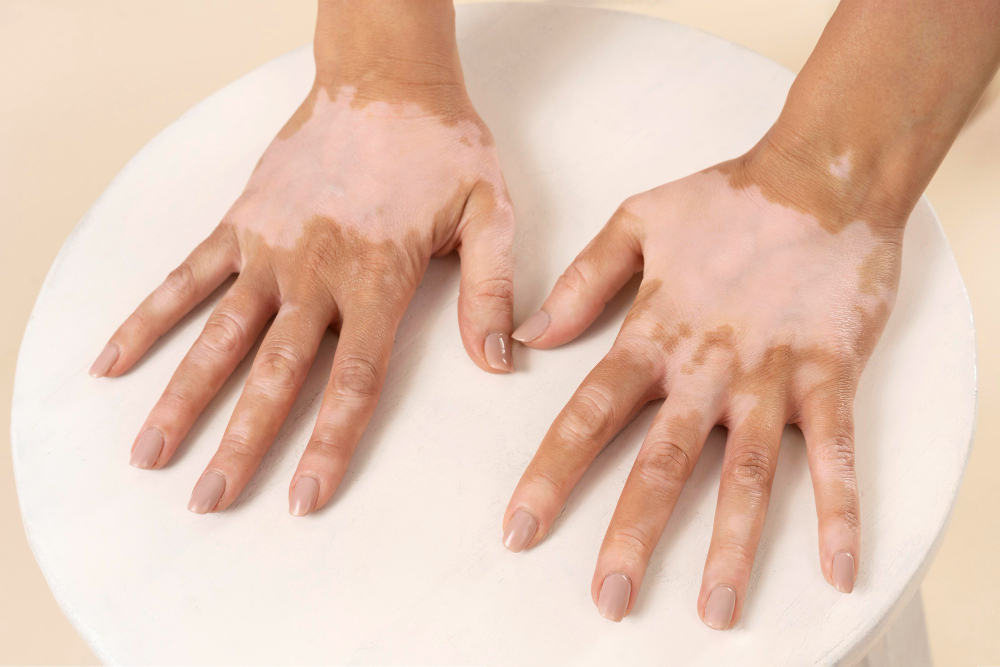
What is Vitiligo?
Vitiligo is a skin condition that causes patches of skin to lose their color. These patches often look lighter than the rest of your skin. For many people, vitiligo can start at any age. However, it often appears before age 30. Because vitiligo affects skin color, many people notice it first on the face, hands, or arms. In some cases, it can also affect hair or even the inside of the mouth. Although vitiligo is not dangerous, it can affect how you feel about your appearance. Importantly, vitiligo is not contagious, so you cannot catch it from someone else.
Common Symptoms of Vitiligo
Usually, the main sign of vitiligo is pale or white patches on the skin. These patches can appear anywhere. Sometimes, they start small and slowly get bigger. In addition, you may notice:
Because these changes can happen slowly, it is important to watch for new or growing patches. Some people may feel itching before a patch appears. However, most people do not feel pain or discomfort from the patches themselves.
Causes and Risk Factors
Experts do not know exactly what causes vitiligo. However, most agree it is linked to the immune system. In vitiligo, the body’s immune system attacks the cells that give skin its color. These cells are called melanocytes. As a result, patches of skin lose their color. While anyone can get vitiligo, some factors may increase your risk:
Although vitiligo can affect people of all skin types, it may be more visible in those with darker skin. According to the World Health Organization, about 1% of the world’s population has vitiligo.
How Vitiligo is Diagnosed
If you notice skin color changes, a doctor can help find the cause. First, your doctor will look at your skin and ask about your health history. Next, they may use a special lamp called a Wood’s lamp to see the patches more clearly. Sometimes, doctors may take a small sample of skin for testing. In addition, blood tests may help check for other autoimmune conditions. Because other skin problems can look like vitiligo, getting the right diagnosis is important.
Treatment Options for Vitiligo
Although there is no cure for vitiligo, many treatment options can help. The goal is to restore skin color or slow the spread of patches. Your doctor will suggest the best plan for you. Common vitiligo treatment options include:
Because results vary, it may take time to see changes. In some cases, new treatments like laser therapy or targeted medicines may help. Always talk to your doctor before starting any treatment.
Lifestyle Tips for Living with Vitiligo
Living with vitiligo can be challenging, but some steps can help you manage daily life. For example, protecting your skin from the sun is important. Sunburn can make patches more noticeable. You can try these tips:
Because vitiligo can affect confidence, talking to a counselor may help. In addition, learning about your condition can make you feel more in control. Many people find that sharing their story helps others understand vitiligo better.
Preventive Measures and Myths
Although you cannot always prevent vitiligo, you can take steps to protect your skin. For instance, avoid harsh chemicals and protect yourself from cuts or burns. Some people believe myths about vitiligo, such as it being caused by eating certain foods or being contagious. However, these ideas are not true. Vitiligo is not caused by diet, and you cannot catch it from touching someone. According to the CDC, vitiligo is a medical condition, not a result of poor hygiene or lifestyle choices. By learning the facts, you can help stop the spread of myths and support those living with vitiligo.