What is Rosacea?
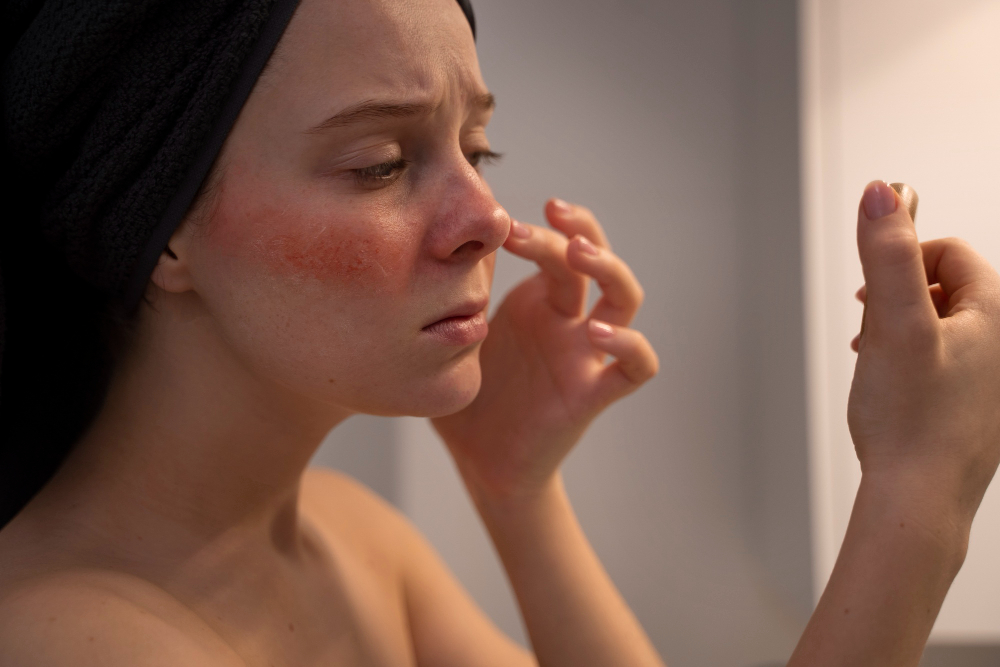
Rosacea is a common skin condition. It mainly causes persistent facial redness and sensitivity. Many people notice their cheeks, nose, chin, or forehead turning red. Sometimes, small bumps or visible blood vessels also appear. Although rosacea can affect anyone, it is more common in adults with fair skin. While it is not dangerous, it can cause discomfort and affect self-confidence. According to the American Academy of Dermatology, millions of people worldwide live with rosacea.
Common Symptoms of Rosacea
Rosacea symptoms can vary from person to person. However, most people notice a few key signs. Early detection helps manage the condition better. For example, you may see:
Sometimes, symptoms get worse with triggers like sunlight, spicy foods, or stress. Therefore, knowing your triggers can help you avoid flare-ups.
Causes and Risk Factors
Doctors do not know the exact cause of rosacea. However, several factors may play a role. Genetics, immune system changes, and environmental triggers can all contribute. For instance, you may be at higher risk if:
Additionally, triggers like hot drinks, alcohol, spicy foods, heat, and stress can make symptoms worse. Therefore, learning to avoid these triggers is important.
How Rosacea is Diagnosed
Doctors diagnose rosacea by looking at your skin and asking about your symptoms. There is no single test for rosacea. Instead, your doctor may rule out other skin problems first. For example, they may check for allergies or other conditions that cause redness. If you have eye symptoms, an eye doctor may also help with diagnosis. Early diagnosis can help you start treatment sooner.
Treatment Options for Rosacea
While there is no cure for rosacea, many treatment options can control symptoms. Your doctor may suggest:
Because each person is different, your treatment plan may change over time. Always follow your doctor’s advice for the best results.
Lifestyle Tips and Home Care
Managing rosacea at home is important. Simple changes can make a big difference. For example, you can:
In addition, keeping a diary of your symptoms and triggers can help you manage flare-ups better.
Prevention and When to See a Dermatologist
Although you cannot always prevent rosacea, you can lower your risk of flare-ups. For instance, protect your skin from the sun and avoid harsh products. If you notice persistent facial redness or other symptoms, it is best to see a dermatologist. Early treatment can prevent symptoms from getting worse. Moreover, a dermatologist can help you find the right rosacea treatment options for your skin type.
In summary, rosacea is a common condition that causes facial redness and sensitivity. With the right care, most people can manage their symptoms well. If you have concerns about your skin, consult Dr. Rajesh at Maheshwari Skin Clinic for personalized advice.